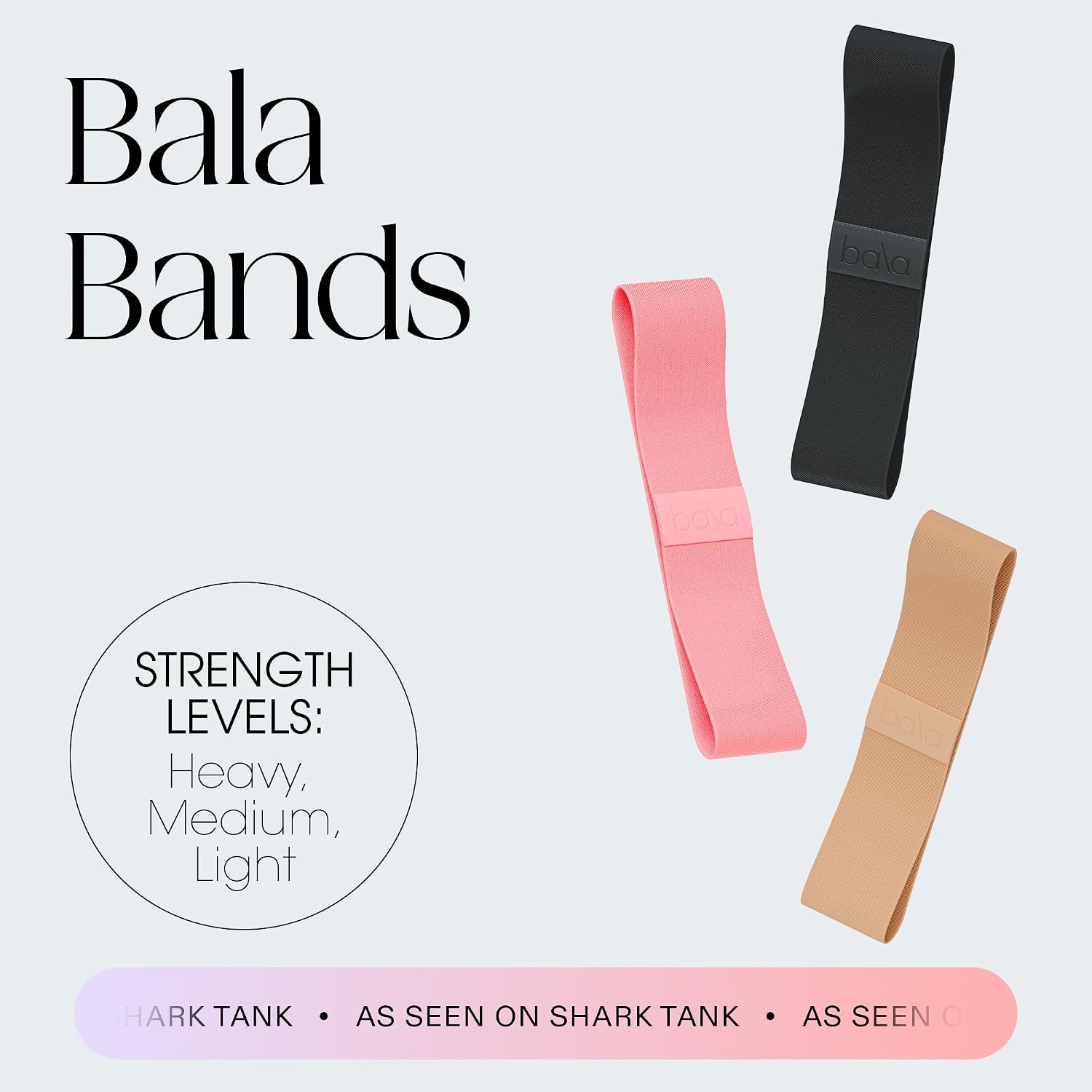
Fabric resistance bands — those wide, soft-textured loop bands worn around the thighs or ankles during exercises like squats, hip thrusts, and glute bridges — have a reputation problem. The concept is solid: wrap a band around your legs to add resistance and force your glutes (the large muscles in your backside) to work harder. But anyone who’s used the cheaper versions knows the frustrating reality: mid-set, the band starts migrating south like it’s trying to escape your workout entirely. That rolling or sliding is called band creep, and it’s more than annoying — it disrupts movement patterns, cuts sets short, and, for rehabilitation patients rebuilding hip stability, can compromise the entire therapeutic purpose of the exercise. This guide synthesizes owner reports, published specs, and performance patterns across eight widely available fabric booty bands to answer one practical question: which ones actually stay where you put them, and why?
Why Fabric Bands Slip — and What Actually Prevents It
Before comparing brands, it’s worth understanding the mechanics. Most fabric bands are constructed from a polyester-spandex or nylon-spandex woven shell with either a latex rubber insert or silicone grip dots/strips on the inner surface. The outer shell handles tension; the inner surface handles traction against skin or clothing fabric. When a band slips, one of three things is usually happening:
- Insufficient inner-surface friction — the silicone grip is too sparse, too smooth, or degraded from washing
- Band width mismatch — a narrow band (under 2 inches) concentrates force over a small area and tips more easily under lateral torque
- Resistance rating mismatch — a band that’s too light for the movement generates slack during the eccentric (lowering) phase, which allows the band to reposition itself
Published specs and owner reports across multiple platforms point to a consistent pattern: bands with continuous silicone weave or dense dot grids outperform those with single-row dot strips, especially on smooth athletic leggings. Wirecutter’s resistance band review (updated 2025) specifically flags inner-surface texture density as one of the primary differentiators in their evaluation criteria for fabric loop bands. Barbend’s updated 2025 band roundup echoes this, noting that brands with sparse or edge-only grip strips “consistently generate more rolling complaints” in aggregated user feedback.
Width matters too. ACE Fitness’s published resource on resistance band training notes that contact surface area directly affects band stability during compound lower-body movements — a 3-inch-wide band distributes load over a larger contact patch, reducing the rotational torque that causes rolling.
The 8 Brands: What the Pattern of Reviews Reveals
Here’s how eight commonly available fabric booty band brands break down across the variables that matter most for non-slip performance.
Tier 1 — Consistently Reliable (Low Creep Reports)
Peach Bands Owners consistently report minimal rolling even on slick leggings. The inner surface uses a dense, continuous silicone weave rather than dot strips, and the band width sits at approximately 3 inches across the most popular resistance levels. Resistance ranges from roughly light (15–25 lb equivalent) to extra heavy (45–65 lb). Reviews across aggregated platforms note that the “heavy” and “extra heavy” variants are where this brand earns its reputation — enough tension to eliminate slack on eccentric hip thrust phases, which is exactly when band creep happens most.
Gymshark Resistance Bands Available as part of their accessory line, the Gymshark fabric bands use a similar wide-band, dense-grip construction. Owner reports are notably positive for use on smooth fabric, which is a meaningful data point given their customer base wears Gymshark leggings. Wirecutter’s 2025 evaluation notes their construction quality as above average for the price tier (approximately $20–$35 for a set).
Perform Better Mini Fabric Bands Perform Better is a clinical and strength-coaching supply company, and their fabric loop bands reflect a specification mindset. Per their published product pages (2025 catalog), band widths are standardized at 2.5–3 inches and resistance is labeled in approximate pound ranges rather than vague “light/heavy” descriptors. The APTA’s clinical practice resources on lower-extremity resistance band rehabilitation cite standardized resistance ratings as a meaningful factor in therapeutic progressions — Perform Better’s approach aligns with that standard. These are our recommended pick for PTs equipping clinical practices or coaches programming load progressions where band resistance needs to be tracked.
Tier 2 — Good Performance With Caveats
Undersun Fitness Fabric Bands Undersun has a strong reputation in the home-gym community, and their fabric bands earn generally positive reviews. Owners report reliable grip on bare skin and textured athletic fabrics, but several aggregated reviews note increased slippage on very smooth, compression-style leggings. The silicone dot pattern is present but less dense than Tier 1 options. At roughly $20–$30 for a set, the value proposition is solid for home gym use where clothing fabric may vary.
WODFitters Fabric Bands WODFitters is well-regarded in the CrossFit and functional training community for their latex tube bands, and their fabric loop line carries similar brand credibility. Owner reports describe adequate non-slip performance for most lower-body work, with occasional creep noted during kneeling exercises (where thigh-to-shin band angle creates more torque). For strength training contexts like hip thrusts and standing abductions, the performance pattern is positive.
Banded (formerly known as the brand used by competitive powerlifters) Positioned toward the competitive lifter, Banded’s fabric loops sit in the $25–$45 range per band. Published spec comparisons show resistance ratings that skew heavier than most consumer fabric bands, topping out in the 50–80 lb range. This is relevant for advanced lifters using accommodating resistance in squat warm-up protocols. Non-slip performance reviews are generally strong, though some owners note the narrower width of their highest-resistance variants (closer to 2 inches) creates more rolling risk than the wider mid-range options.
Tier 3 — Functional, With Known Tradeoffs
Fit Simplify Resistance Loop Bands (Fabric Version) Fit Simplify’s latex loop bands are among the most purchased entry-level bands on the market, and their fabric variant extends that reach. At $8–$15 for a set, the value floor is the appeal. Owner reports are realistic: adequate grip on bare skin, increased slippage on smooth fabrics, and the expected durability tradeoffs at this price point. The silicone strip runs along the inner edge rather than across the full interior surface — the most common construction shortcut at this price. For rehabilitation patients in early recovery doing light glute activation work in a clinical or home setting, this tier is appropriate. For anyone programming progressive overload across a mesocycle, the resistance labeling inconsistency (Barbend’s 2025 review notes Fit Simplify’s resistance ratings are “approximate at best”) limits utility.
Bodylastics Fabric Loop Bands Bodylastics is best known for their stackable tube band system, and their fabric loop line is a secondary product. Performance reviews are mixed — adequate for light glute activation work, less reliable for heavier resistance applications. For home gym builders who already own the Bodylastics tube band system and want fabric loops as a complement, the purchase makes sense for brand familiarity. As a primary fabric band purchase, there are stronger options at similar price points.
By the Numbers
| Brand | Approx. Price (Set) | Band Width | Inner Grip Type | Creep Reports (Pattern) |
|---|---|---|---|---|
| Peach Bands | $25–$40 | ~3 in | Continuous silicone weave | Low |
| Gymshark | $20–$35 | ~3 in | Dense dot grid | Low |
| Perform Better | $18–$30 | 2.5–3 in | Dense dot grid, standardized specs | Low |
| Undersun | $20–$30 | ~2.5 in | Moderate dot pattern | Low–Moderate |
| WODFitters | $22–$35 | ~2.5 in | Moderate dot pattern | Low–Moderate |
| Banded | $25–$45 | 2–3 in (varies) | Dense weave, width varies by resistance | Low–Moderate |
| Fit Simplify | $8–$15 | ~2 in | Edge strip only | Moderate–High |
| Bodylastics | $15–$25 | ~2 in | Edge strip only | Moderate |
The Resistance Rating Problem Nobody Talks About
One of the more frustrating realities in the fabric band market is the absence of standardization in resistance labeling. “Heavy” means something different on a Fit Simplify band than it does on a Perform Better or Banded product. This matters for two reasons:
For progressive overload — if you’re running a structured lower-body program and trying to add 5–10 lb of band resistance each week, a vague “medium” label gives you nothing to work with. Barbend’s 2025 review explicitly recommends cross-referencing manufacturer-stated pound ranges rather than trusting color or label descriptors, noting that discrepancies of 10–20 lb between stated and actual tension are common in the lower price tiers.
For rehabilitation contexts — the APTA’s clinical practice resources on resistance band rehabilitation emphasize that load progression in post-surgical or injury recovery protocols requires quantifiable resistance increments. Brands that publish actual pound ranges (Perform Better, Banded) are meaningfully more useful in clinical programming than those that use only qualitative descriptors.
Clear Decision Rules
After working through owner patterns, published specs, and the variables that drive non-slip performance, the decision map looks like this:
If you’re a PT equipping a clinical practice or a strength coach running documented progressions: Perform Better’s fabric bands are the practical choice. Published resistance specs, clinical-grade labeling, and consistent construction make them the only option in this roundup purpose-built for that context.
If you’re an intermediate home gym builder prioritizing non-slip performance on smooth leggings: Peach Bands or Gymshark are the straightforward recommendations. Both score consistently low on creep reports, both offer genuine resistance ranges up to 50+ lb equivalents, and both sit in a price range ($25–$40 per set) that’s reasonable for the performance delivered.
If you’re a competitive lifter or advanced athlete wanting heavy-resistance fabric bands for squat warm-ups or hip thrust work: Banded’s heavier variants are worth the premium, with the caveat to size up in width if their catalog offers it. Pair with Perform Better if you want standardized specs alongside.
If you’re a rehabilitation patient doing early-stage glute activation with light resistance: Fit Simplify or Undersun are both appropriate at their price tier. Manage expectations on slippage — if your PT has you doing banded clamshells on a treatment table in shorts, bare skin contact largely neutralizes the smooth-fabric problem.
If you want one set that handles everything from PT protocols to moderate strength training: Undersun or WODFitters in the middle resistance tiers. Neither is the top performer on grip, but both offer a usable resistance range and have broader availability than specialty brands.
The one category to avoid: any fabric band with edge-strip-only silicone construction in a heavy resistance rating. That combination — maximum tension with minimum grip surface — is the most reliable recipe for band creep in the data.