Handled tube bands — the kind with plastic or foam D-ring handles attached to a latex or rubber tube — are one of the most purchased pieces of home gym equipment on the market. If you’ve never bought one, here’s the basic idea: you anchor the band under a door, to a wall mount, or to a rack, grab the handles, and use the elastic tension to perform exercises like rows, curls, chest presses, and shoulder work. The resistance increases the more you stretch the band. The problem is that “30 lbs of resistance,” as printed on the box, rarely means what most people assume it means — and for intermediate-to-advanced lifters building a real home gym program, that gap between the label and lived experience is where purchasing decisions go wrong. This guide breaks down how tension claims are generated, where they mislead, and how to choose a handled tube band setup that actually fits your training loads and goals.
Why the Numbers on the Box Are Technically True and Practically Misleading
Every major tube band brand prints a tension rating on the band or packaging. That number represents the peak resistance at a specific stretch length, usually measured at 100–150% elongation from the band’s resting state. It is a real measurement. It is also almost never the resistance you experience during a rep.
Here’s the math that matters: if a band is rated at “30 lbs” at 150% elongation, but your exercise range of motion only stretches it to 80% elongation, you might be working against 12–18 lbs for most of the rep — with a spike at full extension that briefly touches the rated number. Stronger By Science, in Greg Nuckols’s 2022 article “Accommodating Resistance: What the Research Says,” notes that elastic resistance creates an ascending strength curve: load is lowest at the start of the movement and highest at the end, the opposite of most free-weight exercises. For some movements (pull-aparts, tricep pushdowns), this is a feature. For others (bicep curls, rows requiring full tension in the stretched position), it’s a genuine limitation.
The second source of confusion is setup geometry. The Wirecutter / New York Times guide “The Best Resistance Bands” (last updated 2025) flags this consistently: the resistance you experience from a tube band depends heavily on the anchor point height, your stance, and how much slack is in the band at the start of the movement. Two setups using the same band and the same anchor point can produce meaningfully different tension profiles based on how far the user stands from the anchor. Published specs assume a standardized setup; your home gym is not standardized.
By the Numbers
| Rated Tension | Typical Mid-Rep Tension (est. 80% elongation) | Peak Tension (at full extension) | Tier |
|---|---|---|---|
| 10 lbs | 5–7 lbs | 10 lbs | VEICK — $22.36 |
| 30 lbs | 15–20 lbs | 30 lbs | Black — $32.99 |
| 50 lbs | 25–35 lbs | 50 lbs | Black — $32.99 |
| 80 lbs | 40–55 lbs | 80 lbs | Bodylastics — $49.97 |
Estimates based on linear elasticity approximations; actual values vary by band material, temperature, and elongation method. Use as a planning heuristic, not a precision load prescription.
The practical implication: when budgeting for a tube band set, buy one level heavier than your intuition says. If you’re rowing 40 lbs on cable equipment and want to replicate that in your home gym, you likely need a band rated at 50–60 lbs to get a comparable training stimulus across the full rep.
Where Brands Diverge: Consistency, Durability, and Stacking
Once you accept that the number on the box is a ceiling rather than an average, the next variable separating brands is how consistently that ceiling is hit — and whether the band degrades quickly enough to lower that ceiling mid-program. The three tiers below cover the brands most documented in independent reviews and clinical procurement guides.
Budget Tier: Black Mountain Products
Black Mountain Products occupies the budget-friendly end of the intermediate range, with full sets typically running $25–$55. Across aggregated reviews, the pattern is clear: handles are less comfortable during high-rep sessions, and the tubes show wear faster under heavy stacking than mid-tier alternatives. For casual home use or travel, this category is adequate. For a primary home gym training tool used five days per week, reviews suggest replacement within 12–18 months of regular use. The BarBend “Best Resistance Bands” buyer’s guide (2025 edition) notes that budget-tier tube bands are appropriate as supplementary tools but recommends stepping up for lifters who depend on bands as a primary loading method.
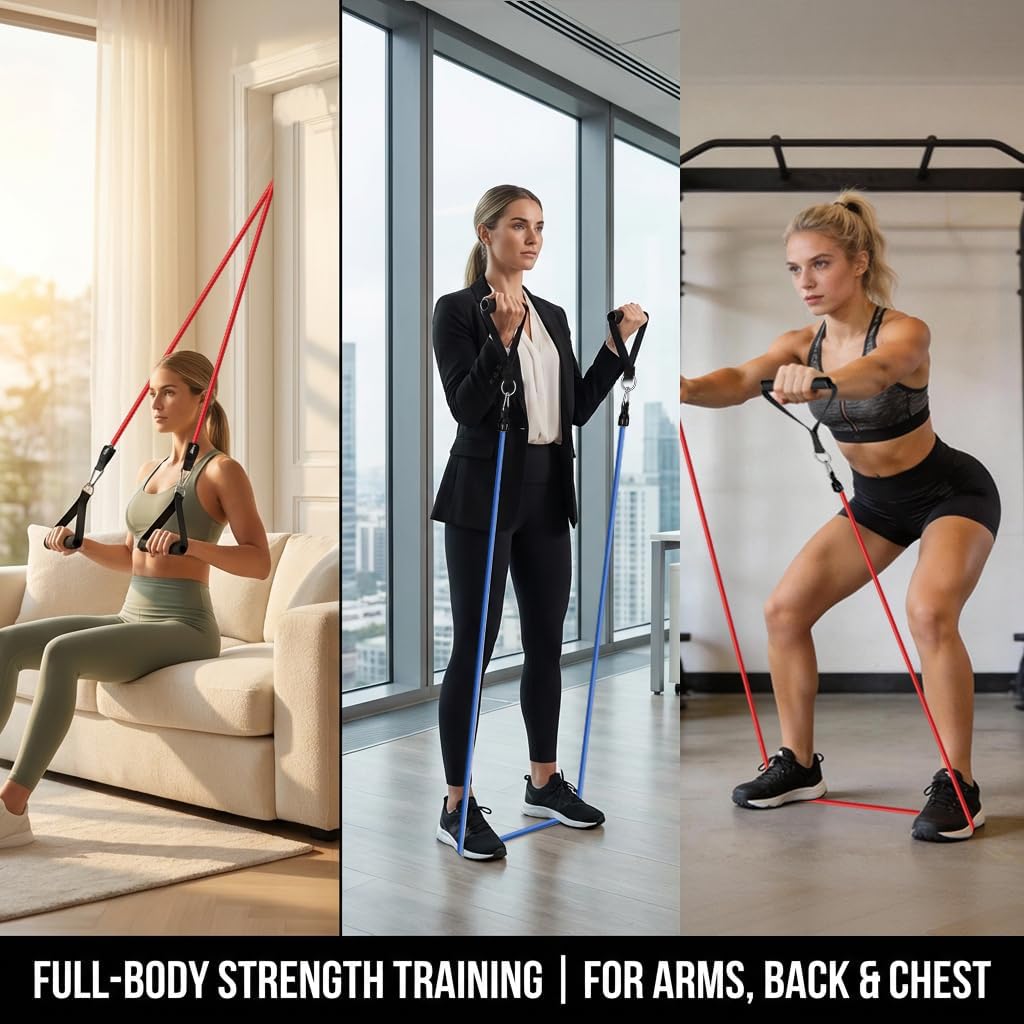
VEICK
$22.36
In stock on Amazon
Check price on AmazonMid-Tier: Bodylastics and WODFitters
Bodylastics is the most frequently cited brand in this category for intermediate home gym builders. The BarBend 2025 buying guide rates Bodylastics sets highly for band-to-band consistency within a set, which matters when you’re stacking multiple bands on a single handle — a common technique for reaching higher resistance loads. Owners consistently report that the anti-snap sleeve technology, a nylon braid running inside the tube, reduces catastrophic failure risk compared to unsleeved bands. The included handles are durable enough for long-term use, and full sets run $40–$90 depending on piece count.
WODFitters targets the CrossFit-adjacent and functional fitness market. Their tube bands with handles are reviewed favorably for anchor versatility — door anchors, rack mounts, and landmine-style setups — and the latex compound tends to hold tension better in cold environments, a real consideration if your home gym is an unheated garage in winter. Published specs from WODFitters show resistance ranges of 2–150 lbs depending on configuration, though BarBend’s independent review notes that upper-end ratings require stacking three or more bands simultaneously. WODFitters uses a standard carabiner-style attachment at the handle, which means handles and bands are interchangeable with other open-standard hardware — a meaningful advantage for long-term cost management and replacement flexibility.
One underrated cost factor in both brands: handles are often the first component to fail mechanically, and replacement handles are not universally interchangeable. Bodylastics uses a proprietary clip system; WODFitters uses the open-standard carabiner. If interoperability matters to your purchase calculus, WODFitters’ approach is the more flexible long-term choice.
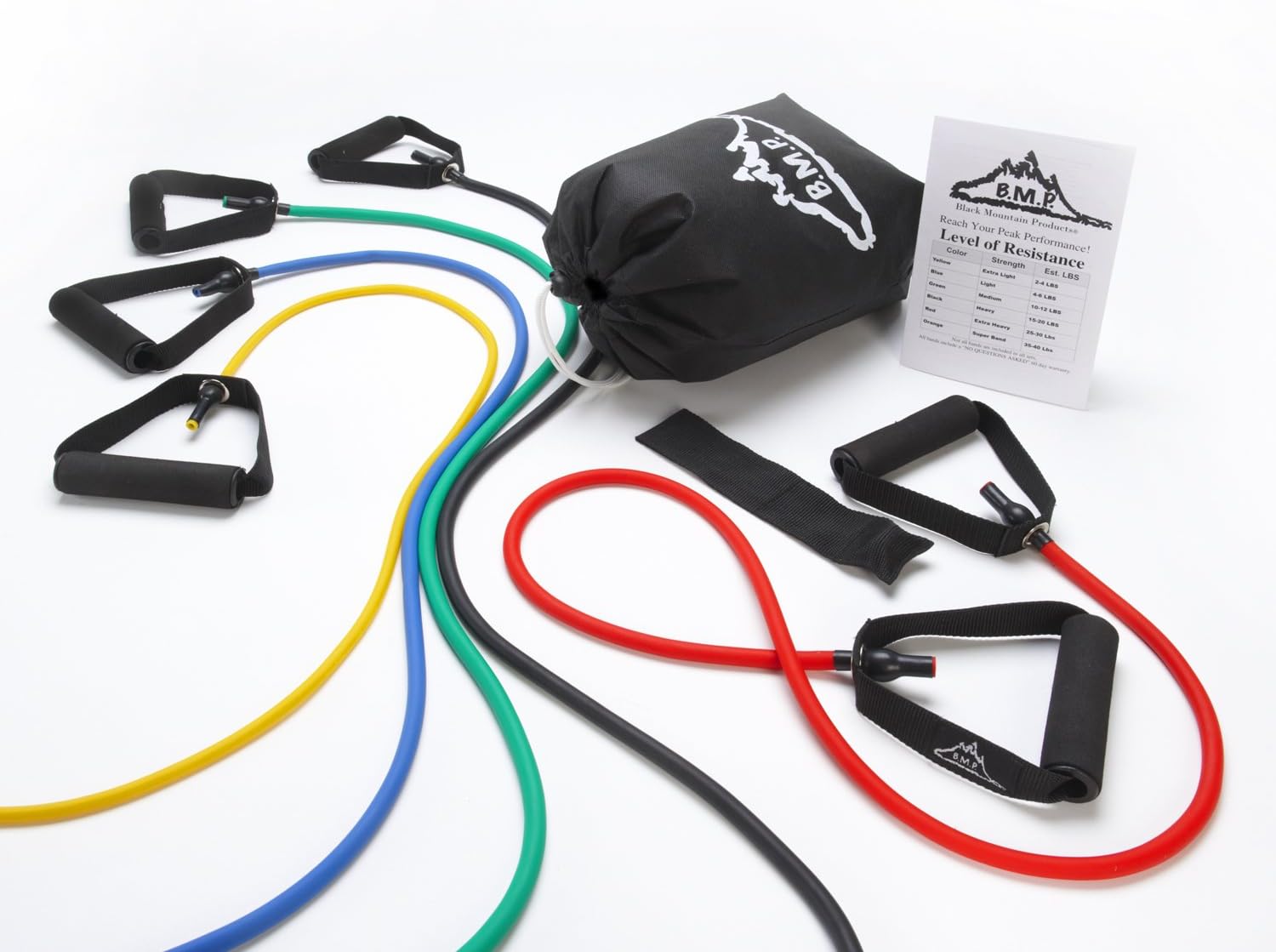
Black
$32.99
In stock on Amazon
Check price on AmazonPremium Tier: Perform Better Professional Tube Systems
Perform Better’s tube band systems — part of their broader resistance training catalog — are the professional-grade option most frequently specified by certified strength coaches and physical therapists equipping clinical or semi-clinical spaces. Per Perform Better’s published product specification sheets (accessed 2025), their tubes are manufactured to tighter tension tolerances and carry more explicit elongation data than consumer-grade alternatives. This is useful for designing progressive overload programs with specific load targets rather than approximations.
The American Physical Therapy Association, in its “Resistance Training and Elastic Bands: Clinical Practice Considerations” resource available through the APTA Learning Center, notes that for rehabilitation contexts, reproducibility of resistance across sessions is clinically important. That is precisely where professional-tier consistency matters practically rather than as a marketing claim. Individual tubes from Perform Better run $15–$25 each, compared to $3–$6 for budget equivalents — a meaningful cost difference that reflects manufacturing tolerance rather than branding premium alone. Long-run owner reports suggest Perform Better tubes exceed 36 months of regular use before tension loss becomes noticeable, compared to 18–36 months for mid-tier sets and 9–18 months for budget alternatives.
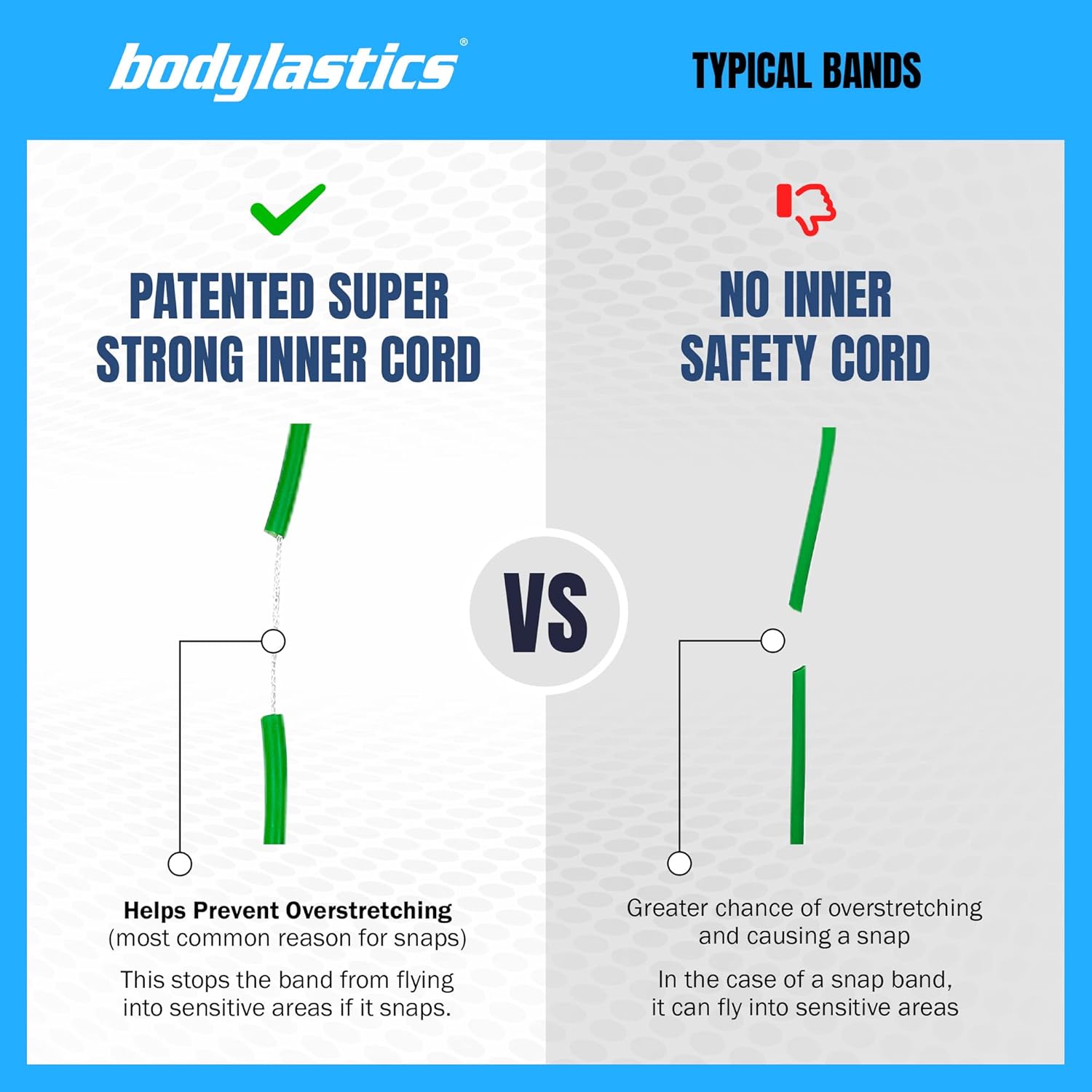
Bodylastics
$49.97
In stock on Amazon
Check price on AmazonMatching a Band Setup to a Training Goal: The Decision Framework
This is where most buying guides stall out with “it depends.” Here’s the if/then version.
If You’re Building a Primary Pulling and Auxiliary Pushing Program
For a home gym without a cable machine, you need a minimum of four resistance levels with meaningful gaps between them — for example, 10, 20, 40, and 60 lbs rated. Bodylastics’ 14-piece stackable system or WODFitters’ multi-band set covers this efficiently. Budget $65–$90. Buy a second anchor kit; door anchors fail more often than the bands do, and a backup saves a training session.
If You’re a Strength Athlete Using Bands as an Accessory Tool
Tube bands with handles are appropriate for high-rep accessory work: face pulls, banded tricep pushdowns, and shoulder health circuits. They are not appropriate as primary loading tools for compound barbell patterns. For accommodating resistance on squats or bench — bands looped around the barbell — you need heavy loop bands like those in the Rogue Fitness Shorty Monster Band category; tube bands with handles don’t anchor securely enough under barbell loads. If tubes are your accessory category only, a mid-tier set ($40–$65) is sufficient. You don’t need the $90 professional configuration for face pulls and pushdowns.
If You’re a Physical Therapy Patient or Post-Surgical Athlete
The APTA’s clinical recommendations, as referenced in “Resistance Training and Elastic Bands: Clinical Practice Considerations,” emphasize starting with clinician-specified resistance levels — typically light-gauge tubes in the 2–8 lb range — before progressing. For this population, TheraBand CLX sets offer superior elongation data and are referenced in published clinical protocols, as documented in materials available through theraband.com. Perform Better’s rehab-grade tube systems are also appropriate. Avoid unbranded or budget sets in this context; tension inconsistency is a clinical risk, not just a performance annoyance.
The Durability Question: What Owners Actually Experience Over Time
No band lasts forever. Latex degrades from UV exposure, ozone, sweat contact, and mechanical stress at the attachment point where the tube meets the handle clip. Across long-run owner reports on Bodylastics and WODFitters specifically, the failure pattern is almost always at the crimp point — not mid-tube — which is why the anti-snap sleeve matters less for lifespan than the quality of the handle attachment hardware.
The durability tiers track clearly to price:
- Budget (Black Mountain, unbranded): 9–18 months under regular use before tension loss or handle failure
- Mid-tier (Bodylastics, WODFitters): 18–36 months with consistent training frequency
- Professional (Perform Better): 36+ months, consistent with tighter manufacturing tolerances and heavier-gauge tube walls
One practical note: unbranded sets below $20 present an additional problem beyond durability — their tension specs are unverifiable against any published standard. For training load planning, that makes them functionally useless as precision tools even if they survive mechanically.
Final Recommendation: Clear If/Then
Buy a Bodylastics stackable set (12–14 piece, $65–$90) if you want the best-documented tension consistency and durability for a primary home gym program. The proprietary clips are a minor inconvenience weighed against the reliability data from the BarBend 2025 buyer’s guide and aggregated owner experience.
Buy WODFitters if your home gym is in an unheated space, you want anchor flexibility, or you prefer open-standard hardware that lets you mix handle and band components over time without brand lock-in.
Specify Perform Better’s professional tube systems if you’re a licensed physical therapist equipping a clinical or semi-clinical space, or a strength coach who needs defensible tension data for program design. The price premium is justified by the tolerance documentation and the APTA-aligned clinical reproducibility standards.
Avoid unbranded sets below $20 for any application beyond light occasional use. The tension specs are unverifiable, the durability pattern in aggregated reviews is poor, and the attachment hardware failure risk is meaningfully higher than mid-tier alternatives.
The number on the box is a ceiling, not a promise. Understand that, match the resistance level to your actual setup geometry, and the decision becomes straightforward.