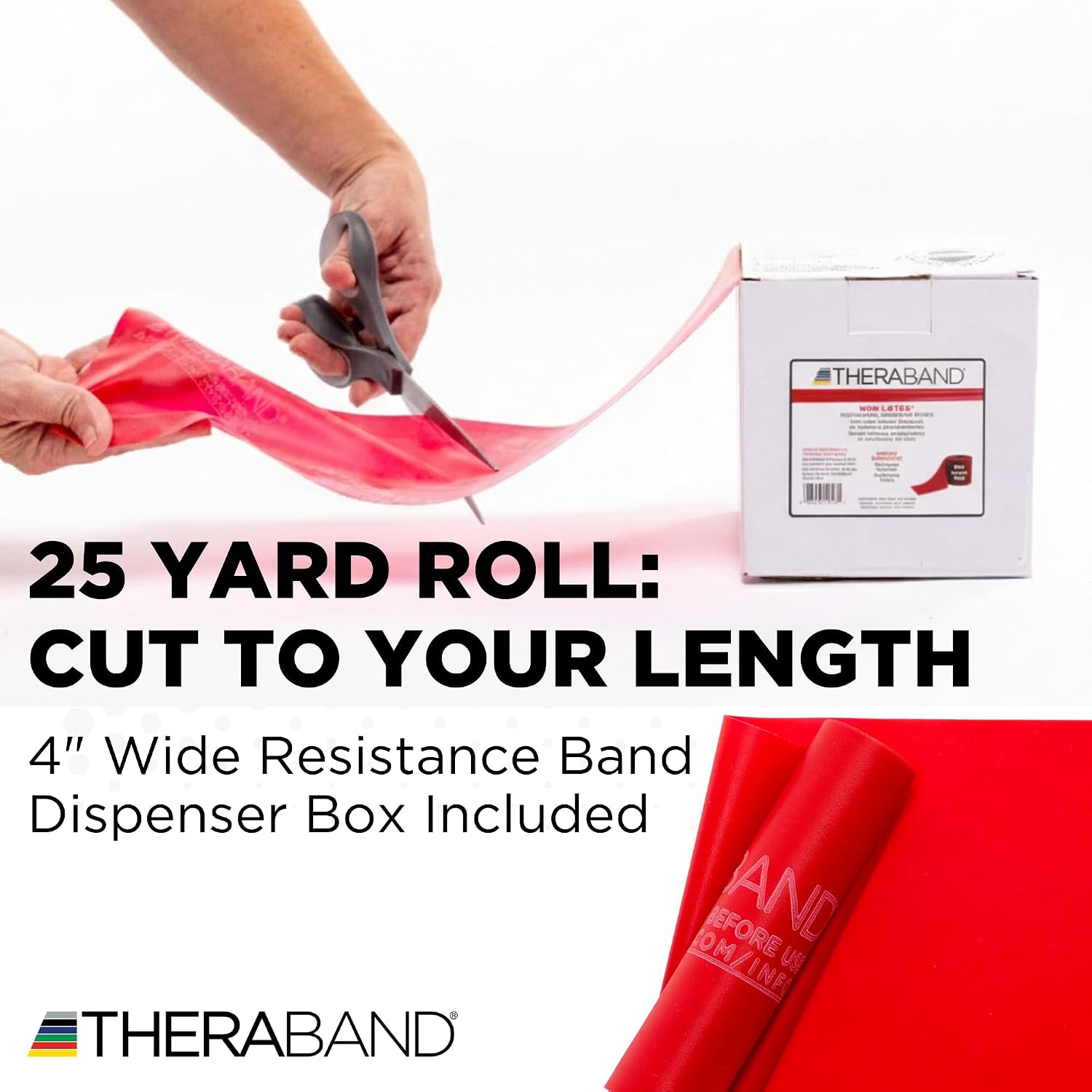
Resistance bands are elastic tools — loops or strips of stretchy material — used in physical therapy and strength training to create controlled resistance during movement. Most are made from natural rubber latex, the same material as surgical gloves. That’s fine for the majority of users, but for anyone with a latex allergy (an immune reaction to proteins found in natural rubber), contact with a latex band can range from a mild skin rash to a dangerous anaphylactic response. In a clinical environment — an outpatient PT clinic, a hospital-based rehab gym, or a certified athletic training room — this isn’t a niche edge case. It’s a patient safety protocol. This article explains what “latex-free” actually means when it’s printed on a band’s packaging, how to tell the difference between a marketing claim and a clinically verified specification, and which product lines consistently meet the bar for allergy-sensitive rehab settings.
If you’re a licensed PT, strength coach working within a medical framework, or a home-gym owner rebuilding after surgery with a clinician’s protocol in hand, this is the decision framework you need before you buy.
| EDITOR'S PICK[THERABAND Resistance Band](https://www.amazon.com/dp/B001CPP6DS?tag=greenflower20-20) | Mid-tier[A AZURELIFE Resistance Bands](https://www.amazon.com/dp/B07Y2XXFF2?tag=greenflower20-20) | Budget pick[Therapy Flat Resistance Bands S…](https://www.amazon.com/dp/B0C5H9DP3W?tag=greenflower20-20) | |
|---|---|---|---|
| Material | Latex-free elastic | Non-latex elastic | Latex-free flat elastic |
| Length | 25-yard roll (75 ft) | — | — |
| Color Coded | ✓ | — | — |
| Price | $35.19 | $9.99 | $7.99 |
| See on Amazon → | See on Amazon → | See on Amazon → |
Why “Latex-Free” Is Not a Standardized Term — and Why That Matters Clinically
Here’s the problem: there is no single federal regulatory body in the United States that defines “latex-free” for resistance bands the way the FDA defines it for medical devices like gloves or catheters. Manufacturers can print “latex-free” on packaging based on their own internal testing — or, in some cases, based on nothing more than the fact that the primary material isn’t natural rubber latex. That’s a significant gap when you’re working with patients who have Type I latex hypersensitivity (the IgE-mediated immune response that causes the most severe reactions).
The American Physical Therapy Association’s position document on latex allergy in the clinical setting draws a clear distinction between two relevant terms:
- Latex-free: Contains no natural rubber latex proteins. This is the standard required for high-sensitivity patients.
- Low-latex or latex-reduced: The item contains latex but at lower concentrations, or has been processed to reduce protein levels. Still a potential trigger.
A band made from thermoplastic elastomer (TPE), silicone, or synthetic rubber (like EPDM) can legitimately carry a “latex-free” claim if manufactured and tested correctly. The question is whether the manufacturer has third-party validation or simply a self-reported claim. When specifying bands for a clinical practice, that distinction is the first filter you apply — not the color-coding system, not the resistance level.
Per a PubMed-indexed review on latex allergy prevalence in healthcare workers (National Center for Biotechnology Information), estimates suggest 8–12% of healthcare workers have some degree of latex sensitization, compared to roughly 1% of the general population. In a rehab clinic where both practitioner and patient may be sensitized, the risk compounds. A latex band handled repeatedly by a clinician who later touches a patient is a documented exposure pathway, not a theoretical one.
What “Clinical-Grade” Actually Means for Resistance Bands
The term “clinical-grade” is even less regulated than “latex-free.” On Amazon listings and generic wholesale sites, you’ll see it applied to bands that are indistinguishable from dollar-store fitness accessories. In a real clinical context, clinical-grade implies a specific cluster of attributes:
1. Verified material composition with documentation available. The manufacturer can provide a material safety data sheet (MSDS) or safety data sheet (SDS) confirming the polymer type and the absence of latex proteins. TheraBand’s professional resistance band product specification sheets, available directly at theraband.com, are the industry benchmark for this — they explicitly identify the material as latex-free thermoplastic elastomer and provide lot-level documentation that clinical buyers can request.
2. Consistent tension tolerances across production runs. A clinical protocol prescribes resistance in measurable terms. If a “medium” band from one lot pulls at 3.5 lbs at a 100% elongation and the next lot pulls at 5 lbs, the protocol breaks down. TheraBand publishes elongation-force tables for each color in their professional line; Perform Better’s rehab band documentation includes similar data. This is the spec-sheet discipline that separates clinical supply from general fitness retail.
3. Durability and hygiene standards appropriate for multi-patient environments. Bands used in a clinic touch multiple patients across a week. Clinical-grade products typically specify surface cleanability (whether the material tolerates standard disinfectant wipe-down without degradation), latex-free composition of the band itself and any packaging components, and shelf-stable performance over the documented useful life.
4. Traceable manufacturer support. If a patient has a reaction, you need a manufacturer you can call. This isn’t paranoia — it’s the same standard applied to any clinical consumable.
The Brands That Actually Clear the Bar
TheraBand CLX and TheraBand Professional Resistance Bands
TheraBand is the closest thing the rehab market has to a reference standard. Their CLX (Consecutive Loop) series and the classic flat resistance bands are manufactured in latex-free TPE and carry published elongation-force tables across all resistance levels (Tan through Gold in the standard line). The CLX format — which has integrated loops along the band’s length — is particularly useful for upper-extremity rehab where a patient needs to grip without wrapping the band around fingers, reducing both the mechanical and allergy exposure risk.
By the numbers — TheraBand Professional Latex-Free Band, Red (Medium), 100% elongation:
- Published force at 100% elongation: approximately 2.9 lbs
- Published force at 200% elongation: approximately 5.3 lbs
- Price range for 6-yard dispenser rolls: approximately $18–$30 depending on retailer and quantity
- CLX single-user set (5 resistance levels): $30–$85 depending on configuration
Across practitioner reviews and clinical procurement discussions, the pattern is consistent: TheraBand’s latex-free line delivers predictable tension that matches published specs closely enough to anchor a formal protocol. Clinicians report that the TPE formulation holds up through typical session volumes without the surface tackiness degradation that some TPE bands show under frequent use.
Perform Better Superbands and Rehab Bands
Perform Better’s rehab-specific flat bands are manufactured from synthetic rubber and are documented as latex-free in their product materials at performbetter.com. The Perform Better line skews toward higher resistance levels than TheraBand’s lightest options, which makes them more useful for the mid-to-late rehabilitation phases and general strength work rather than acute post-surgical protocols where a 0.5–1.5 lb resistance range is clinically meaningful.
For PTs equipping a practice with a full resistance spectrum, the practical approach many clinicians take is a TheraBand CLX system for early-phase and neurological rehab work, and Perform Better bands for the bridge into functional and return-to-sport loading. The price points are comparable; the material documentation from both manufacturers supports clinical use.
What to Watch Out For in the Mid-Market
The $15–$40 segment is where marketing language diverges most sharply from material reality. Brands like WODFitters and Bodylastics produce competitively priced bands that are genuine values for home-gym use — their tension consistency and durability are solid for the price, and both companies identify their flat bands as latex-free. However, third-party material certification documentation is not as systematically available as it is from TheraBand or Perform Better. For a home-gym user with a mild latex sensitivity following a clinician’s protocol, this is likely an acceptable tradeoff. For a licensed practitioner outfitting a clinical environment where patient safety documentation is part of the standard of care, the documentation gap is a harder problem.
The NSCA’s position on resistance training for rehabilitation (available at nsca.com) emphasizes that equipment selection in clinical contexts should be driven by verifiable performance parameters — a principle that applies directly to material certification, not just tension curves.
The Decision Framework: If X, Then Y
This is where the clinical context and the procurement budget meet. Here’s the logic tree:
If you are a licensed PT outfitting a clinical practice where any patient may have latex sensitization: → Source TheraBand Professional Latex-Free or CLX as your primary band system. Request SDS documentation from your distributor at the time of purchase. This is not bureaucratic excess — it’s the documentation you need if a patient ever reports a reaction and you need to demonstrate due diligence.
If you are a strength coach or certified AT working in a medical-adjacent setting (sports medicine room, hospital fitness center) with written latex allergy protocols from the supervising clinician: → TheraBand or Perform Better both clear the documentation bar. Choose based on the resistance range your protocols require. Perform Better for resistance > 5 lbs at working elongation; TheraBand CLX for < 3 lbs and fine motor/neurological work.
If you are a home-gym user rebuilding post-surgery with a latex allergy, working from a clinician’s written protocol: → A TheraBand CLX starter set ($30–$50) is the right call. You get the same material that your PT’s clinic uses, published tension specs that match what your protocol references, and a format designed for self-administered rehab. The home-gym mid-market options (WODFitters, Bodylastics) are worth considering once you’re past the acute phase and building into functional strength — the documentation gaps matter less when the clinical stakes are lower.
If you are evaluating bands labeled “clinical-grade” from a brand you don’t recognize: → Ask for three things before purchasing: (1) the SDS or MSDS confirming latex-free material composition, (2) published elongation-force data for each resistance level, and (3) the manufacturer’s lot traceability policy. If any of those three are unavailable, the “clinical-grade” claim is a marketing term, not a clinical specification.
A Note on Cross-Contamination That’s Often Overlooked
Even a fully latex-free band can become an exposure risk if it’s stored in the same bin as latex bands, or if it’s handled with latex gloves before being given to a patient. The American Physical Therapy Association’s clinical latex allergy guidance addresses this directly: latex-free protocols require latex-free environments for the full patient contact chain, not just latex-free products in isolation. If your clinic is transitioning to latex-free bands, that transition should include storage, handling gloves, and patient intake screening — not just a product swap.
This is the operational detail that separates practitioners who’ve built a real latex-safe protocol from those who’ve bought the right bands but haven’t closed the loop on the workflow around them.
The bottom line is straightforward: “latex-free” is a meaningful claim when it’s backed by documented material composition and third-party or manufacturer-verified testing. “Clinical-grade” earns its label when that documentation is paired with consistent tension tolerances and manufacturer traceability. TheraBand’s professional latex-free line sets the reference standard for the rehab market; Perform Better is the credible alternative for higher resistance applications. Everything else in the market requires more scrutiny before it belongs in a clinical setting — and the scrutiny is worth the extra ten minutes before you sign the purchase order.