A resistance band is, at its simplest, a loop of elastic material you stretch against your muscles to create load. At $8 for a five-pack from a budget brand, they seem interchangeable with clinical-grade options like TheraBand that can cost $30–$85 for a comparable set. But intermediate and advanced users — physical therapists outfitting a practice, strength coaches building periodization blocks, or home-gym athletes who’ve snapped their second cheap band in a month — know that “elastic loop” is where the similarity ends. This article breaks down exactly where the durability gap between TheraBand and budget loop bands shows up in real use, which differences are meaningful for your training context, and how to run the math on whether the premium is worth it for your situation.
The Durability Gap Is Real — But It’s Not Uniform
Let’s be precise: durability means different things depending on how a band fails. There are three distinct failure modes in loop bands:
- Snap failure — the band tears or snaps mid-use, usually at a stress concentration point.
- Creep and set — the band permanently elongates over time, losing its rated tension without visibly breaking.
- Surface degradation — the material becomes sticky, chalky, or micro-cracked, which accelerates the first two.
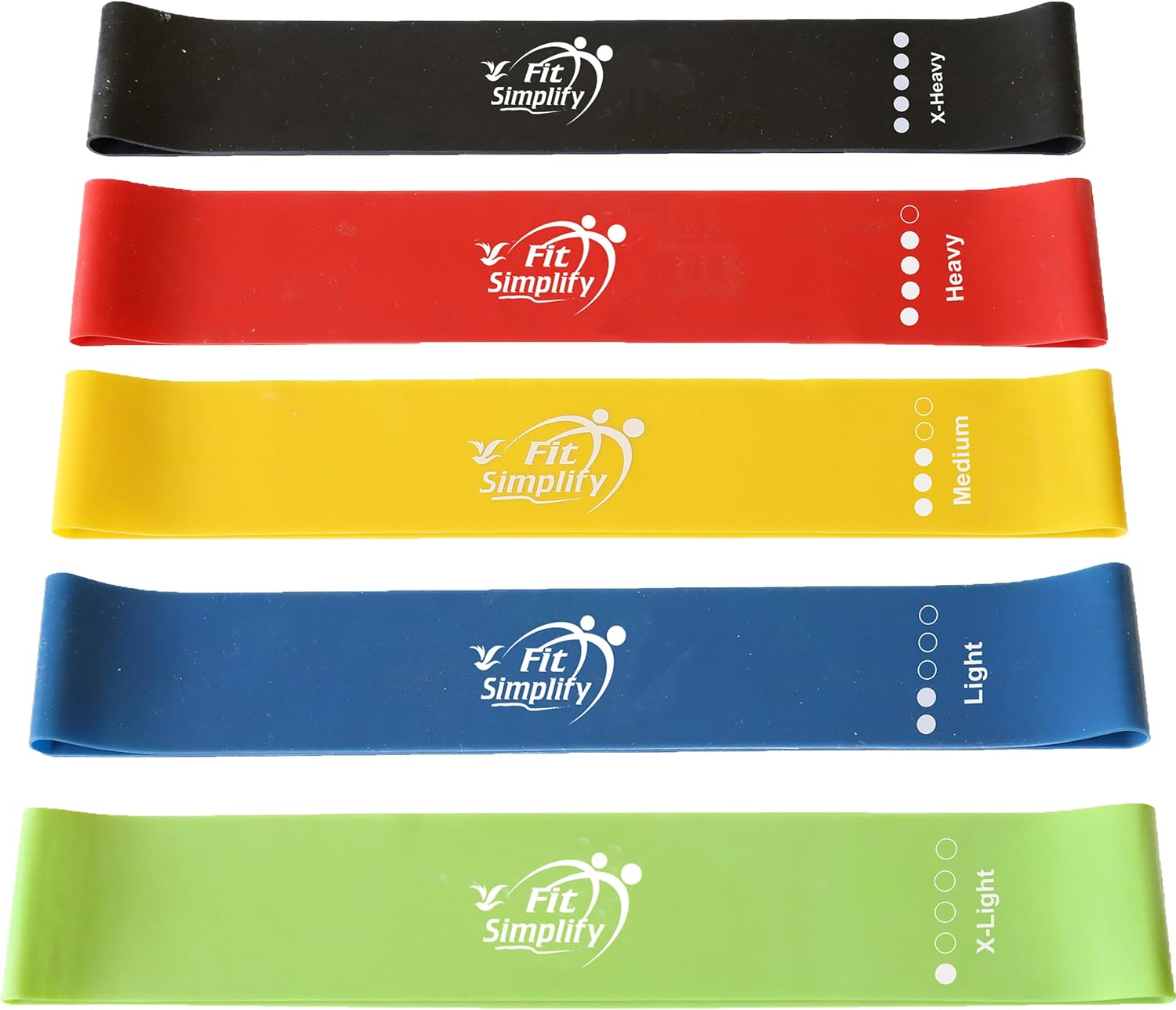
Budget loop bands — think the sub-$15 five-packs common on Amazon under brands like Fit Simplify, Whatafit, or generic private-label sets — fail predominantly through snap failure and surface degradation. According to Performance Health’s published product specification sheets for TheraBand CLX and Professional Resistance Bands (Performance Health, TheraBand CLX and Professional Resistance Band Product Specification Sheets, 2024), their bands are manufactured from natural rubber latex to a uniform layered thickness specifically engineered to resist creep. That’s not a minor manufacturing distinction; it directly maps to which failure mode you’re dealing with.
BarBend’s resistance band buying guide (BarBend, Best Resistance Bands — Buying Guide and Comparative Review, 2025) tracks this pattern consistently across long-run user data: budget loop bands rated at a given resistance level frequently show measurable tension loss within 60–90 days of regular use, whereas TheraBand CLX users report stable performance over 6–12 month periods under comparable protocols. That is not a small gap.
Where Budget Bands Hold Up Fine
Before this becomes a one-sided case for the premium option, the tradeoffs deserve a clear look. Budget loop bands perform adequately — sometimes quite well — in specific contexts:
Light rehab and mobility work. If you’re using a light or medium resistance band for hip activation sets, banded glute bridges, or shoulder warm-up sequences with low repetition counts and moderate frequency, the load demands on the material are low. At that intensity, even a $3 band from a five-pack may outlast its usefulness in your program before it ever degrades. The American Physical Therapy Association (APTA), in its guidance documentation on resistance band use in clinical rehabilitation settings (APTA, Resistance Band Use in Clinical Rehabilitation Settings), notes that for introductory-stage patients with low resistance requirements, clinical staff often use lower-cost bands with frequent replacement built into the protocol rather than investing in premium materials.
Travel and throwaway use. A band you’re taking on a hotel-gym trip or packing for a single training camp doesn’t need a five-year lifespan.
Initial exploration. Someone who doesn’t yet know whether they’ll stick with band training has a real argument for starting cheap. Stronger By Science, in their overview of resistance band training mechanisms and equipment considerations (Stronger By Science, Resistance Band Training — Mechanisms, Load Curves, and Equipment Considerations, 2024), notes that band familiarity — learning how to control accommodating resistance, understanding how tension curves change through range of motion — can be developed on any consistent elastic medium before committing to premium equipment.
The honest summary: budget bands are fine until they’re not, and they fail in ways that are often invisible until a snap or a session where your “heavy” band feels suspiciously light.
Where TheraBand Actually Earns the Premium
This is where the practitioner-level decision lives. Three specific use cases create clear separation — each examined below as its own tier.
Clinical and Professional Volume Use
For licensed physical therapists and certified strength and conditioning coaches operating in clinical or professional settings, bands see 20–40 patient or client interactions per week, often in cycles of 15–25 reps across multiple sets. Performance Health’s published specification documentation for TheraBand Professional Resistance Bands states that their bands are designed for clinical-volume use and manufactured under ISO-certified quality controls (Performance Health, TheraBand CLX and Professional Resistance Band Product Specification Sheets, 2024). Budget bands carry no equivalent documentation.
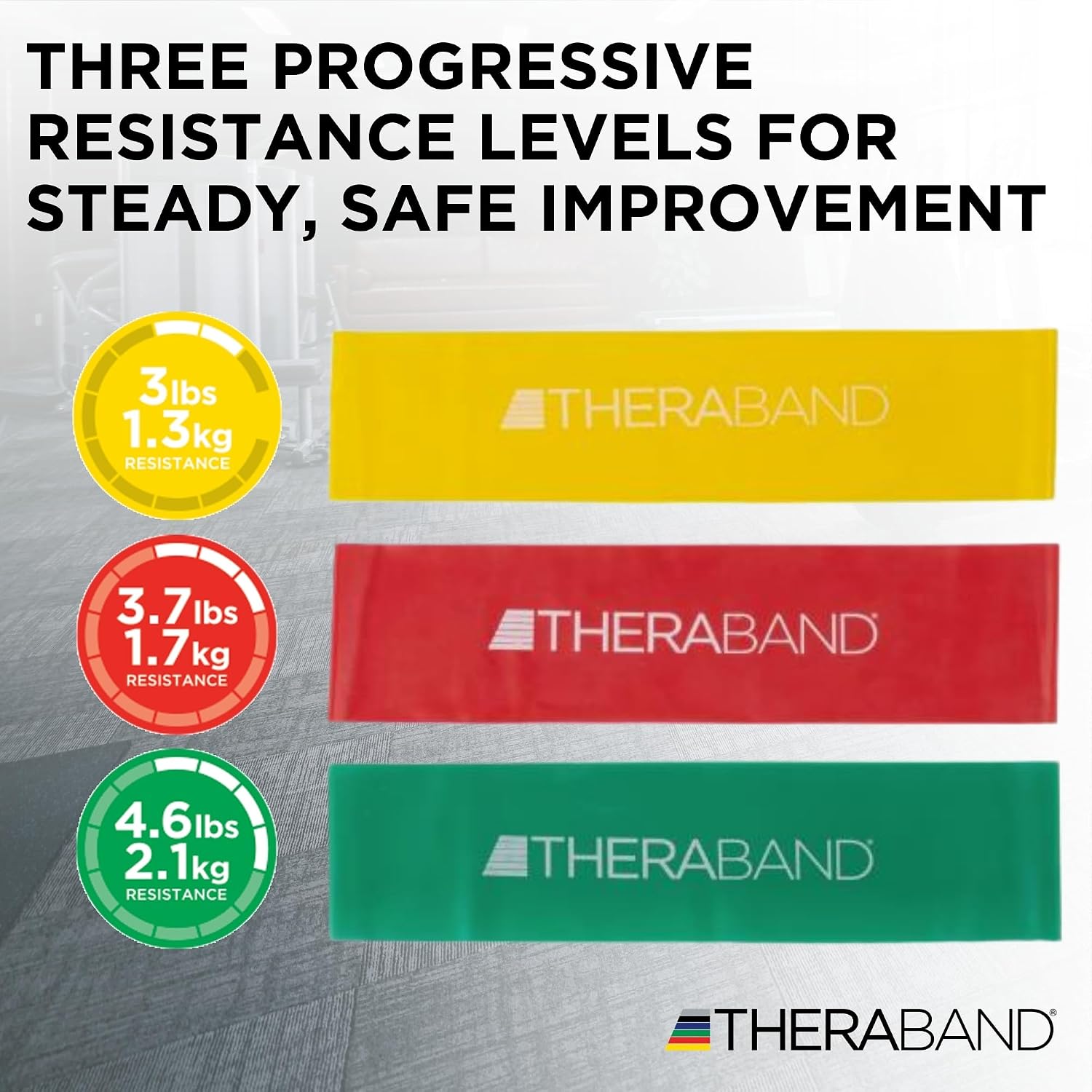
For a PT, this isn’t just about durability — it’s about consistency. If a patient is progressing from yellow to red resistance in a shoulder rehab protocol, the assumption is that the red band delivers meaningfully more resistance than the yellow. TheraBand’s color-coded system is referenced in APTA clinical guidance as a standardized resistance progression framework precisely because its tension ratings are reproducible (APTA, Resistance Band Use in Clinical Rehabilitation Settings). By contrast, BarBend’s 2025 resistance band buying guide notes that many budget-band resistance labels — “light,” “medium,” “heavy” — are effectively unverified marketing copy rather than calibrated specifications, with no published tension data for buyers to cross-reference (BarBend, Best Resistance Bands — Buying Guide and Comparative Review, 2025).
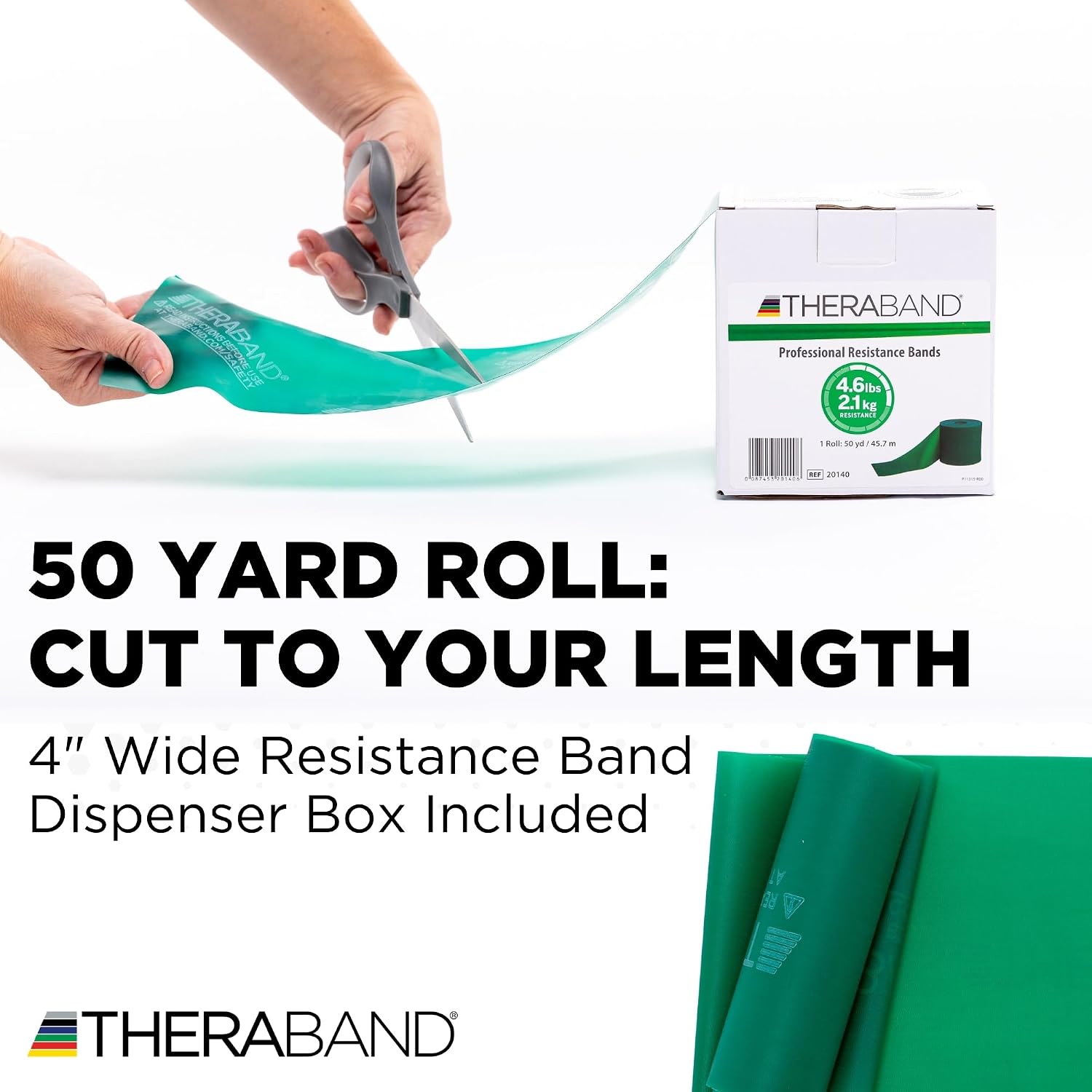
Decision math: A TheraBand CLX set runs $30–$85 depending on configuration. A comparable budget five-pack runs $10–$20. At clinical volume, if the budget set needs replacement every 90 days versus a TheraBand set lasting 12+ months, the annualized cost often inverts. The premium band can cost less per year once replacement frequency is factored in.
THERABAND
$89.86
In stock on Amazon
Check price on AmazonLoad-Matched Periodization Programming
For strength coaches or intermediate-to-advanced athletes using bands as accommodating resistance — adding band tension to a bar so the load increases at lockout — the precision of the tension rating matters directly for program design. Stronger By Science’s resistance band training analysis identifies tension curve accuracy as a key variable for coaches attempting to match accommodating resistance to specific force-velocity targets within a periodization block (Stronger By Science, Resistance Band Training — Mechanisms, Load Curves, and Equipment Considerations, 2024).
If your program calls for 40 lbs of band tension at the top of a squat, a budget band with uncalibrated or degrading resistance introduces noise into that variable. You won’t know if a stalled lift reflects a training adaptation issue or a band-tension issue. TheraBand’s published specifications, and those of comparable clinical-grade options documented by Perform Better in their resistance band product category (Perform Better, Product Documentation and Resistance Band Category Specs, 2025), give you a baseline you can actually hold to across training cycles.
This tier is where mid-range options also begin to earn consideration. BarBend’s buying guide highlights brands like WODFitters and Bodylastics as occupying a middle ground — better documentation than generic private-label sets, lower cost than TheraBand CLX — for athletes who need more consistency than a budget five-pack provides but aren’t running clinical-volume protocols (BarBend, Best Resistance Bands — Buying Guide and Comparative Review, 2025).
THERABAND
$10.43
In stock on Amazon
Check price on AmazonEnvironmental Longevity and Surface Integrity
Surface degradation is the durability story nobody discusses until their band starts leaving residue on their hands or develops micro-cracks after six months stored near a window. Performance Health’s product documentation for TheraBand notes that its natural latex formulation includes stabilizers designed to resist ozone and UV degradation (Performance Health, TheraBand CLX and Professional Resistance Band Product Specification Sheets, 2024). Budget bands — particularly those manufactured from blended or synthetic latex — show surface chalking and tackiness that precedes snap failure much faster under the same environmental conditions.
Perform Better’s resistance band product documentation similarly emphasizes specific storage guidelines for clinical-grade natural rubber, underscoring that material quality determines environmental longevity in ways that synthetic blends cannot match (Perform Better, Product Documentation and Resistance Band Category Specs, 2025). For home-gym users in climates with high UV exposure or significant humidity swings, this distinction matters more than the price tag alone suggests.
At the budget tier: if your use is genuinely low-frequency, low-load, and short-duration — warm-up activation work two or three times per week — a well-stored budget band can persist for a year or more before environmental degradation becomes a performance issue. BarBend’s buying guide flags this explicitly (BarBend, Best Resistance Bands — Buying Guide and Comparative Review, 2025). In that window, the durability premium is hard to justify on cost grounds alone.
Fit
$8.48
In stock on Amazon
Check price on AmazonBy the Numbers
| Factor | TheraBand CLX / Professional | Mid-Tier (WODFitters, Bodylastics) | Typical Budget Loop Band |
|---|---|---|---|
| Price range (set) | $30–$85 | $15–$35 | $8–$20 |
| Tension documentation | Published, color-coded, standardized | Partial — varies by brand | Often absent or unverified |
| Expected lifespan (moderate use) | 12–18+ months | 6–12 months | 60–120 days |
| Annualized cost (moderate use) | ~$30–$50/yr | ~$30–$60/yr | ~$40–$80/yr |
| Clinical-grade certifications | Yes (ISO process per Performance Health) | Generally no | No |
THERABAND
$89.86
In stock on Amazon
Check price on AmazonTHERABAND
$10.43
In stock on Amazon
Check price on AmazonFit
$8.48
In stock on Amazon
Check price on AmazonThe annualized cost math is not always intuitive at first glance. The premium band often costs less per year at moderate-to-high use frequencies once replacement frequency is factored in, especially for practitioners buying for a clinical setting.
The Cases Where Premium Still Loses
There are two scenarios where a TheraBand recommendation doesn’t hold even with the full context:
Early-stage rehabilitation patients on short protocols. A patient doing a 6-week ACL recovery warm-up protocol with light resistance bands, supervised and low-frequency, will likely finish the protocol before any band — budget or premium — fails. In that window, the $8 band is the rational buy.
Home users with low-frequency, low-load use. If you’re doing two light-resistance sessions per week and your band usage amounts to warm-up activation work, the durability gap narrows significantly. BarBend’s buying guide flags this explicitly: at very low use frequencies, even budget bands can persist for a year or more, making the premium difficult to justify on pure durability grounds (BarBend, Best Resistance Bands — Buying Guide and Comparative Review, 2025).
Clear Decision Rules
Buy TheraBand CLX or Professional series if:
- You’re a PT or coach outfitting a practice for clinical or coaching volume (15+ band sessions per week)
- You’re running periodized programming where band tension is a tracked, load-matched variable
- You’re building a home gym you expect to use for 12+ months and want to stop buying replacements
- You’re sourcing bands for post-surgical or precision rehab where tension consistency directly affects patient progression
Consider a mid-tier option (WODFitters, Bodylastics) if:
- You want more consistency than a generic five-pack provides but aren’t running clinical volume
- You’re an intermediate home-gym builder allocating budget across multiple equipment categories
- You want partial tension documentation without full clinical-grade pricing
Stick with budget loop bands if:
- You’re in an early exploration phase with no defined band-training protocol
- You need bands for occasional or travel use with no regular training frequency
- You’re an early-stage rehab patient on a short, supervised, low-resistance protocol
- You’re assembling a starter kit and want to allocate more budget toward heavier resistance tools
The hybrid approach that works for most intermediate home-gym builders: One TheraBand CLX set in your primary working resistance range — where tension accuracy and durability matter for your main lifts or rehab protocol — supplemented by budget loops for warm-up and activation work where snap or tension drift is low-stakes.
The Bottom Line
The durability gap between TheraBand and budget loop bands is real, measurable, and concentrated in three places: snap failure rate, tension creep over time, and surface degradation under environmental exposure. But it’s not universally decisive — it only becomes the dominant factor at clinical volume, in precision-load programming, or when replacement cost is amortized over a serious training timeline. Run the annualized math for your actual use frequency, match it against your protocol needs, and the right call usually becomes clear without much ambiguity. If you’re training or treating seriously, the TheraBand premium pays for itself. If you’re not there yet, it doesn’t need to.