Resistance bands are exactly what they sound like — elastic loops or tubes that create tension (pulling force) when stretched, giving your muscles something to work against without a barbell or cable machine. You can buy a single generic loop for $8, or you can spend $120 on a system that arrives in a carrying case with color-coded tubes, cabiners, door anchors, and a printed workout guide. The question this article answers is a practical one: when does that price gap reflect real, training-relevant differences — and when are you paying for branding? If you’re an intermediate-to-advanced athlete, a strength coach equipping a facility, or a physical therapist building out a clinical toolkit, you’ve probably already asked this. What follows is a structured comparison of three brand systems — TRX Bands, Bodylastics, and Tribe Lifting — with honest math on where each earns its price tag.
What You’re Actually Buying When You Go Premium
Before comparing brands, it’s worth naming the five things that can meaningfully differ between a $15 generic set and a $90 branded system. These aren’t marketing categories — they’re the variables that affect training outcomes and equipment longevity.
1. Tension accuracy and consistency. Cheap bands are often unlabeled or mislabeled for resistance level. A band sold as “medium” from one manufacturer might match a competitor’s “heavy.” This matters enormously for progressive overload — the practice of gradually increasing training stimulus over time. If you can’t trust the labeled tension, you can’t program reliably.
2. Material durability and failure mode. Standard natural latex degrades faster under UV exposure, sweat, and repeated full-stretch cycles. Higher-grade bands use multi-layer latex construction or layered dip-coating on tubes. More importantly, quality bands snap outward (away from the user) or delaminate slowly rather than snapping back unpredictably — a safety issue reviewers at Barbend’s buying guide consistently flag as underreported.
3. Anchor and attachment ecosystem. Tube-style band systems live and die by their attachment points. Door anchors, ankle straps, and D-ring carabiners that work smoothly at high tension are genuinely harder to engineer than they look. Cheap clips strip; cheap door anchors slide.
4. Stackability. Some systems are designed so multiple bands clip onto a single handle, letting you combine resistances precisely. This is a meaningful feature for strength coaches and PTs who need to modulate load in small increments.
5. Warranty and replacement access. This is the hidden cost-of-ownership factor most comparisons skip. A $90 system with a lifetime warranty and cheap individual band replacements can undercut a $25 system that’s non-replaceable and fails at six months.
Brand-by-Brand Breakdown: TRX, Bodylastics, and Tribe Lifting
TRX Resistance Bands
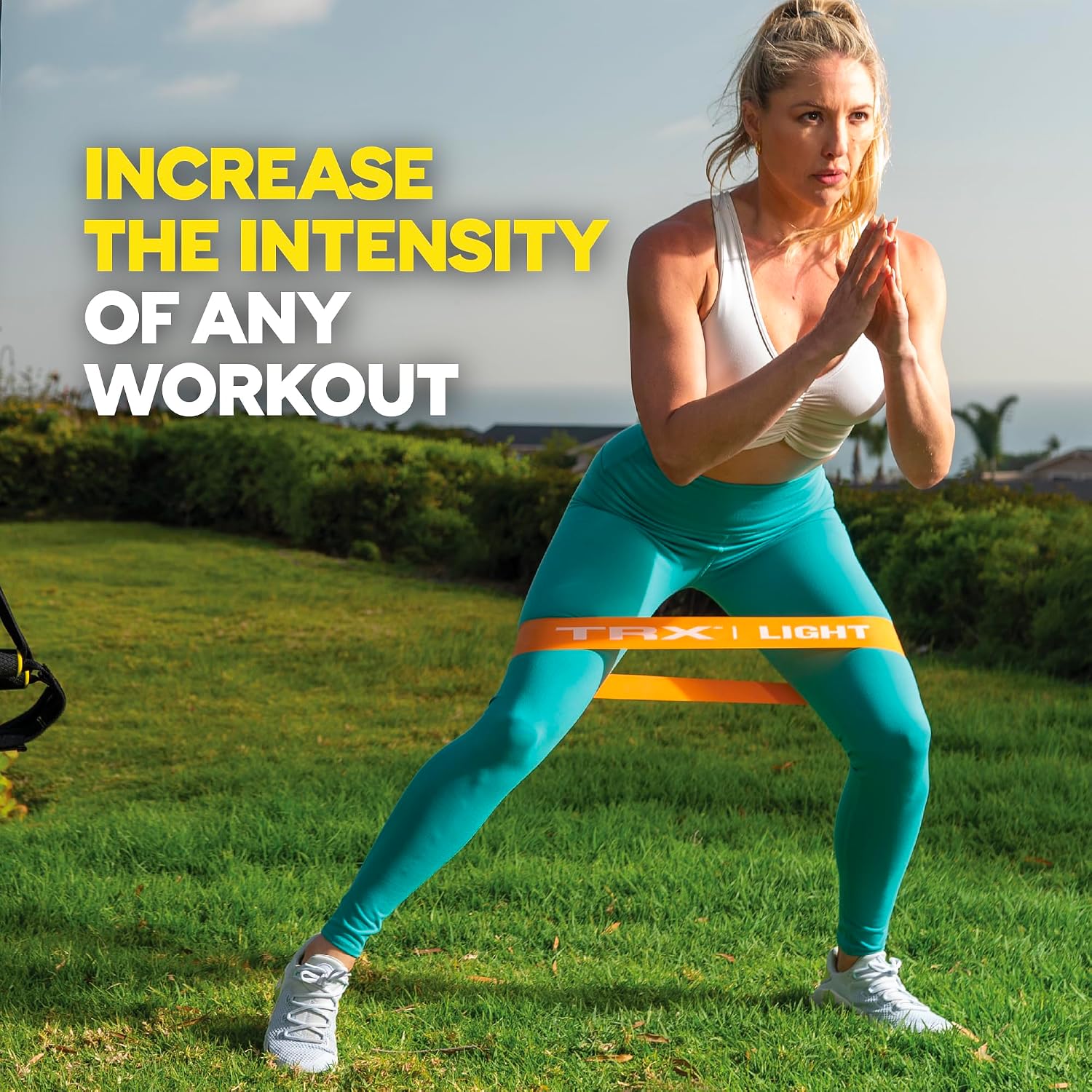
TRX built its identity on suspension training (using bodyweight and anchor points), and its resistance band line extends that philosophy — the bands are designed to integrate with TRX’s anchor ecosystem and work as accessories to bodyweight programming rather than as a standalone progressive resistance system.
What the specs and owner reports show: TRX bands use a flat loop design in their primary resistance line. Tension ratings are published but limited to a smaller range than competitors — reviewers at Outside Online’s 2025 band roundup noted that TRX’s lineup offers fewer incremental resistance steps than Bodylastics or EliteFTS alternatives, which constrains their utility for advanced progressive loading. Build quality is consistently described as high by owners — the latex is thick, the texture grips gloves well, and reviewers report minimal degradation over 12–18 months of regular use.
Where TRX earns its price: The brand premium is most justified if you’re already using TRX suspension anchors. The integration is real — the bands use compatible attachment points, and TRX’s programming library (available via their app) is built around the combined system. For a facility that has already invested in TRX infrastructure, adding resistance bands from the same ecosystem reduces friction and equipment sprawl.
Where it doesn’t: If you’re sourcing bands as a standalone progressive resistance tool — accommodating resistance for barbell work, PT-style isolation exercises, or a home gym build — TRX’s relatively narrow tension range and the premium you pay for brand consistency become harder to justify. The Stronger by Science research review on resistance band training emphasizes that load specificity matters for strength adaptation; fewer resistance steps limits how precisely you can program.
Price range (2026 market): $38–$85 per band or set, depending on configuration.
Buy TRX if: You’re already anchored in the TRX ecosystem and want resistance bands that integrate without adapter workarounds. Don’t buy TRX if your primary use case is load-progressive strength work requiring fine-grained resistance steps.
Bodylastics
Bodylastics is the most directly stackable system in this comparison. Their tube-based design clips multiple bands onto a single handle, with tension ratings that are independently documented and consistently cited in aggregated reviews as more accurate than most mid-market competitors.
By the numbers:
- Starter set: $30–$45 / 5–6 bands (5 lb to 30 lb per band, stackable to ~100 lb combined)
- Deluxe set: $55–$75 / 12–14 bands (stacking to ~200+ lb combined)
- Individual replacement bands: $8–$15 each
What published specs and owner reports show: Bodylastics has published tension charts that map each color-coded band to a resistance range at multiple stretch lengths — a spec detail that Barbend’s buying guide specifically cites as a differentiator for programmers who want to track progressive overload. Owners in long-run reviews frequently highlight the door anchor as one of the more robust in this price segment, and the anti-snap safety sleeve (a layer of nylon over the latex tube) is a documented design feature that addresses the failure-mode concern above.
Where Bodylastics earns its price: For home gym builders and intermediate-level athletes who need a stackable system they can actually program, Bodylastics is arguably the best value proposition in its tier. The NSCA’s resistance training reference manual notes that load specificity and progressive overload are the non-negotiable pillars of strength adaptation; a stackable system with published tension data supports both. PTs and coaches who need to modulate load in 5–10 lb increments across a patient population will find more clinical utility here than in most flat-loop systems.
Where it doesn’t: Tube bands have a different force-velocity curve than flat loop bands — the resistance increase per inch of stretch is steeper in tubes, and at full extension, tubes can feel inconsistent if clips are loose. Owners report that clip quality degrades with high-frequency use (daily clinical use at a PT practice, for instance), and replacement clips are an ongoing minor cost.
Price range: $30–$75 for sets; individual bands $8–$15.
Buy Bodylastics if: You need a stackable, programmable system with published tension data and you’re working in a home gym or small clinic where fine load increments matter. It’s our clearest value pick in the mid-tier.
Tribe Lifting
Tribe Lifting positions itself as a premium flat-loop band system competing with brands like WODFitters and Rogue’s loop offerings. Their primary product is a set of thick flat latex bands in multiple resistance levels, sold as a set or individually, with a focus on pull-aparts, mobility work, accommodating resistance for barbell training, and assisted pull-up progressions.
What published specs and owner reports show: Tribe’s bands are manufactured in layered latex and come with clearly labeled tension ranges. Cross-referencing their published specs against user reports on aggregated review sites shows reasonable accuracy — closer than most generic alternatives, though Barbend’s reviewers note that Tribe’s “medium” to “heavy” range sits slightly lighter than comparable Rogue or EliteFTS options at the same labeled tension. For accommodating resistance work (adding a band to a barbell to increase load at the top of a squat or deadlift), this lighter-than-labeled characteristic is worth knowing.
Where Tribe earns its price: Tribe’s full set covers a meaningful resistance range (approximately 5–175 lb depending on configuration and stretch depth), and the bands themselves are consistently reported as durable through 12+ months of regular gym use. For competitive athletes using bands for warm-up, mobility, and accessory work — not as a primary load mechanism — the quality-per-dollar ratio is competitive.
Where it doesn’t: If you’re sourcing for clinical PT use or facility-level programming where exact tension calibration matters, the slight spec discrepancy between labeled and actual resistance is a real issue. The APTA’s clinical resources on strength training equipment emphasize repeatable, documentable load — a band that runs 10–15% light of its label complicates that.
Price range: $28–$65 for sets.
Buy Tribe Lifting if: You’re a competitive athlete or intermediate home gym builder who wants a quality flat-loop set for mobility, pull-aparts, and accommodating resistance work, and you’re comfortable calibrating by feel rather than by exact spec. Don’t spec Tribe for clinical PT settings where label accuracy is a compliance or documentation issue.
The Decision Matrix: If X, Then Y
Here’s the decision logic, made explicit:
If you need fine-grained, stackable load progression (home gym strength work, PT clinical use, coaching populations with varied strength levels): Bodylastics is the pick. The published tension charts, stackability, and replacement ecosystem give you the most programmable system under $80.
If you’re already using TRX anchors and want ecosystem integration: TRX bands are worth the premium — for that specific use case. For standalone band training, they’re not.
If you’re an intermediate-to-advanced athlete who wants flat-loop bands for accommodating resistance and accessory work: Tribe Lifting competes well in the $28–$65 range, but verify you’re not sourcing for a context where labeled tension accuracy is non-negotiable.
If your priority is clinical-grade documentation and long-term warranty coverage: None of these three are the primary recommendation. Look at TheraBand CLX sets ($30–$85) or Perform Better’s resistance systems — both have clinical specification documentation that the Perform Better 2025 catalog and APTA clinical resources cite as the standard for rehabilitative settings.
If budget is the binding constraint and you’re just starting out: A generic flat-loop set (Fit Simplify, WODFitters entry tier) at $8–$20 is honest value for introductory training. You’ll likely outgrow it in 6–12 months as you dial in your programming — but that’s fine. Upgrade when the resistance range stops covering your needs, not before.
The Bottom Line
Premium band systems earn their price in two specific conditions: when the ecosystem integration is real (TRX), or when published specs and stackability give you programming precision that generic alternatives can’t match (Bodylastics). Tribe Lifting lands in a legitimate middle ground for athletes who don’t need clinical-grade accuracy but do want better build quality than the sub-$20 tier.
What doesn’t justify the premium: branding alone, aesthetic packaging, or marketing language about “professional grade” without supporting spec documentation. Across aggregated reviews and published specifications, the performance gap between a well-spec’d mid-market system and a premium brand is smaller than the price gap suggests — unless you’re in one of the specific use cases above where the premium features directly solve a real problem.
Do the match between your training context and the feature set first. The price will follow logically.